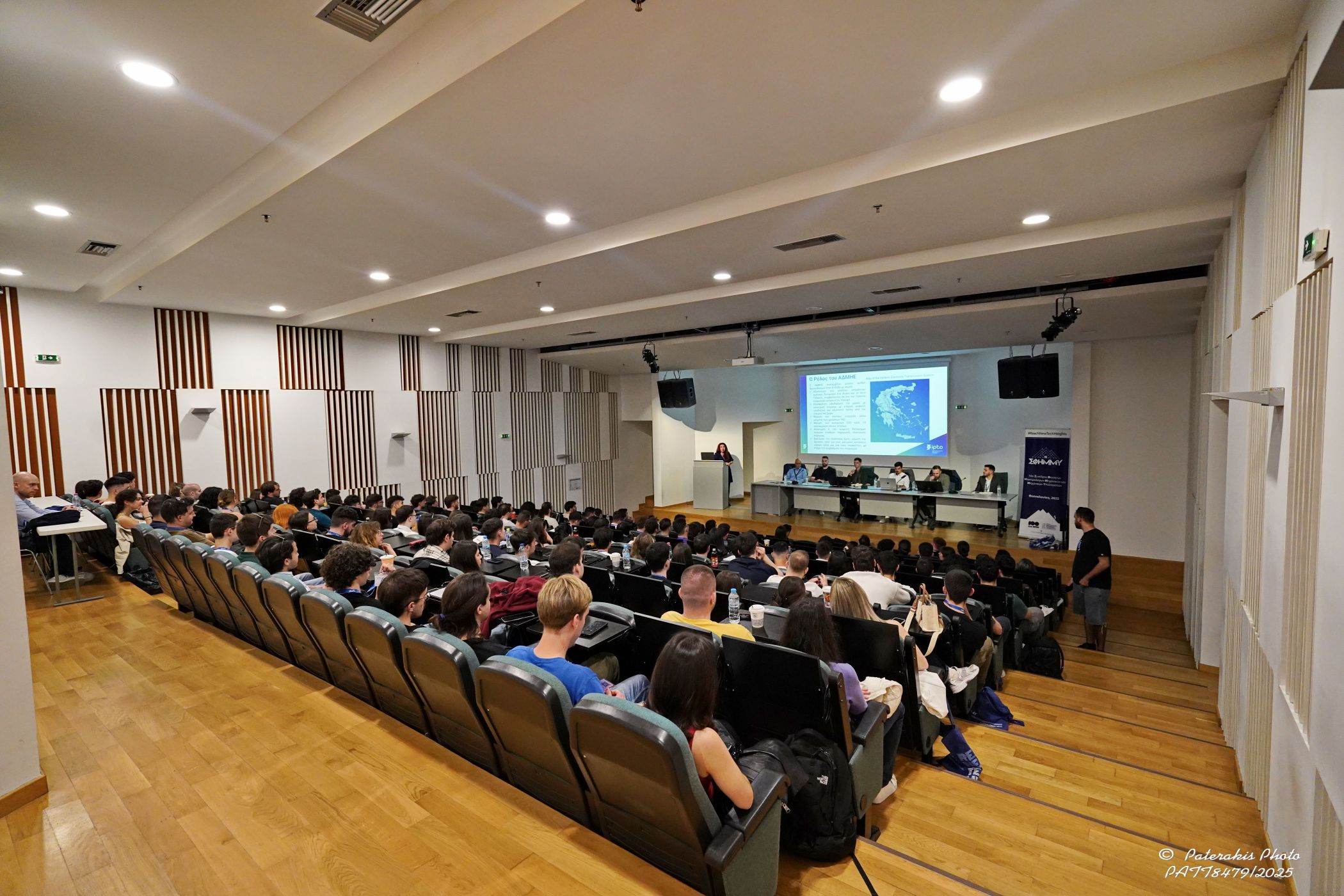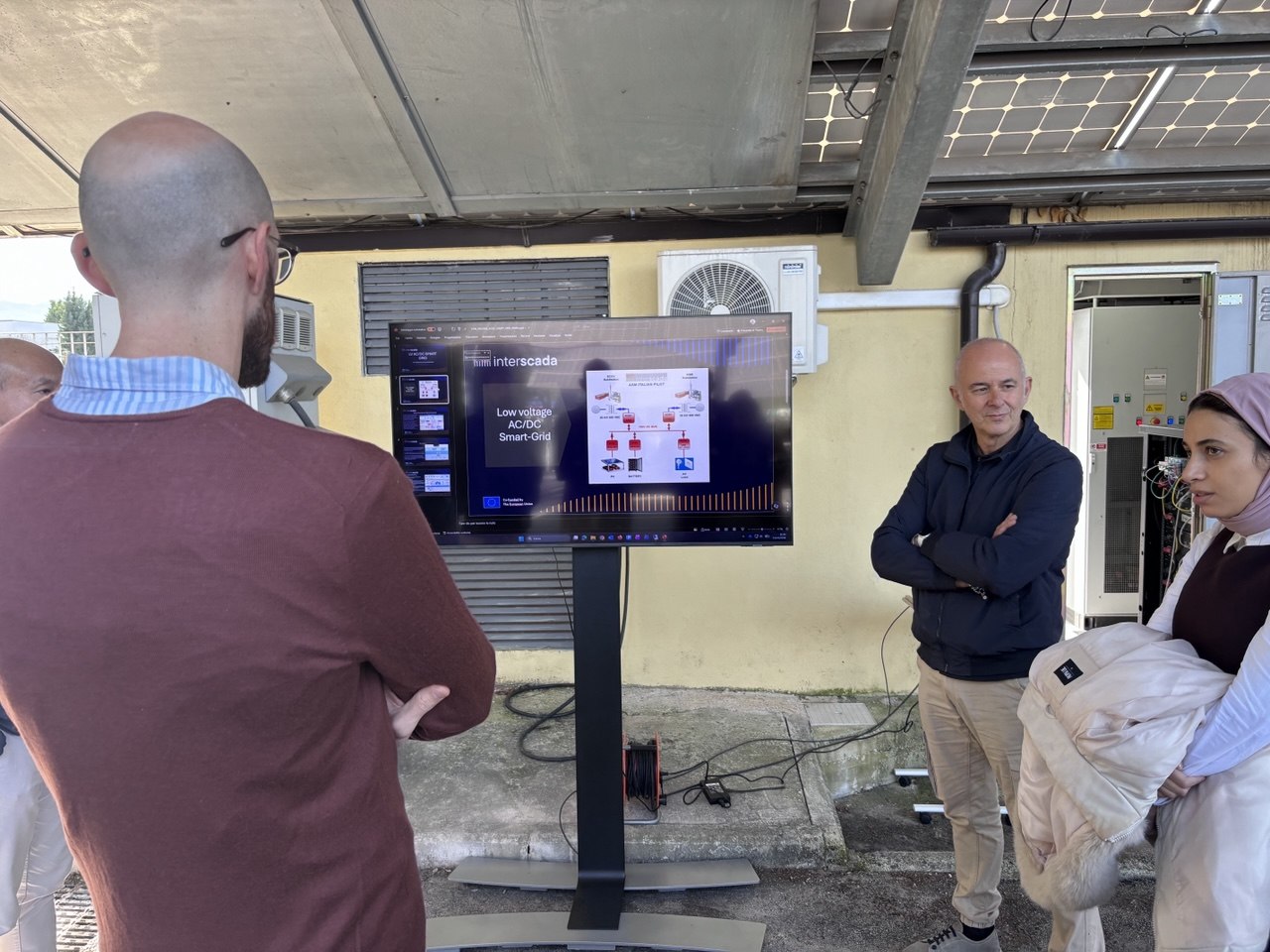
On 14–15 October 2026, the InterSCADA consortium held its fourth General Assembly in Terni, Italy, including a visit to the control room and Living Lab of ASM Terni, home of the Italian pilot. At this stage, the focus was on the four pilot demonstrators in Italy, Greece, Spain and France, where the project’s open-source, vendor-independent SCADA/EMS platform for hybrid AC/DC grids is being connected to real operating environments. In every pilot, existing control systems stay in place and InterSCADA is added alongside them, exchanging data through a common MQTT broker and shared data model.
Italy – ASM Terni (hybrid low-voltage AC/DC grid). The Italian pilot is a real distribution grid in operation, not a laboratory set-up: two secondary substations feed two AC/DC converters that share a 700 V DC bus, together with photovoltaic generation, battery storage and a critical load. The first use case, real-time monitoring of the low-voltage network, is complete: three smart meters publish live measurements every five seconds and are integrated in ASM’s existing SCADA. Next, a measurement unit will be installed on the DC bus, the project’s overvoltage and voltage instability services will be applied to the Italian measurements, and development starts on the second use case, coordinated control of the two converters through droop characteristics. Italy will be the second pilot to connect to the platform, after Greece.
Greece – IPTO (HVDC link). Greece is the first pilot with a live interface: the platform already receives real-time PMU data in IEEE C37.118 format and publishes it as JSON. Four analytics services developed by CIRCE (rate-of-change-of-frequency alarms, voltage instability index, protection algorithm and inertia estimation) were validated on test data from 22 PMUs of the Greek transmission grid, reproducing the reference results, and demonstrated at the assembly. Next, they will run on live data inside IPTO’s network.
Spain – REE, with CIRCE and Elewit (control centre). The Spanish demonstrator focuses on AI-based remedial actions for control-centre operation. A simplified equivalent AC/DC model of the Spanish transmission system has been built, remedial actions have been modelled and implemented, and training of the AI agent has started. The platform now also offers an MQTT interface to transfer and manage network model files. Next: complete the training, test selected scenarios and extend the tool to further models.
France – RTE (HV AC/DC system). The French pilot works on snapshots of historical network data, exchanged in batches rather than streamed live. The Linux-based deployment at RTE is confirmed and the snapshot exchange defined; the tool already runs on small networks, and scaling to the full RTE network is under way. Next: connect to the platform, give RTE access to the GUI and finalise the transfer protocol.
In the coming months, the consortium will complete the remaining platform services, the operator interface and the security features, and move each pilot towards live operation. Results from all four demonstrators are due by the end of the project in September 2027.